
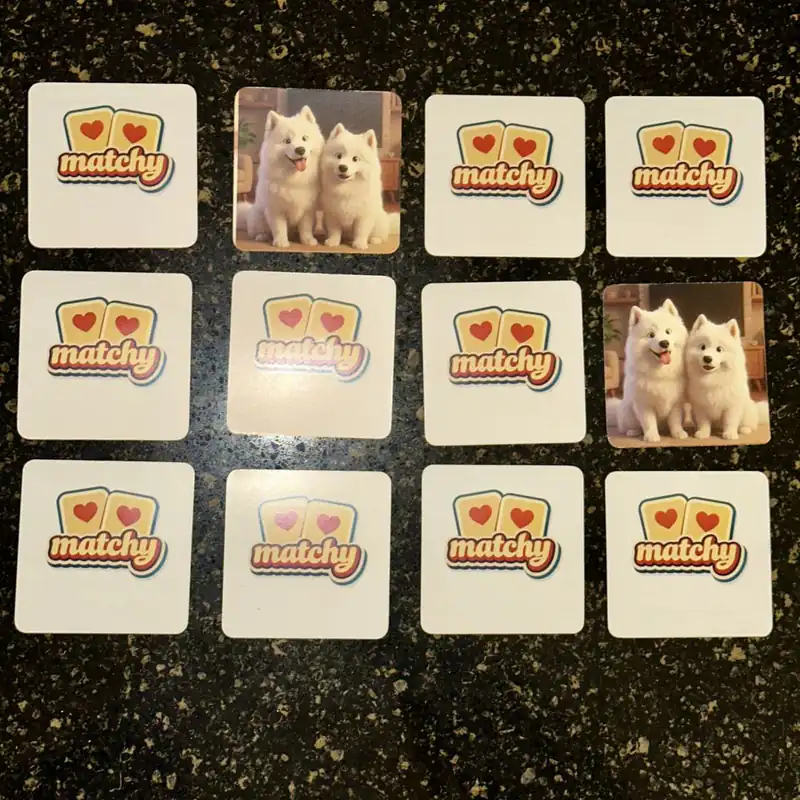
Memory games for toddlers work best small, short and full of faces they love. Twelve cards on the floor. Mom, Dad, the dog, Grandma. A two-year-old flipping a card and yelling "DOG!" is the whole point, whether or not a match happens.
This is a practical guide for parents and grandparents. When to start, how to set up, a few ways to play that fit little hands and short attention spans, and how to keep it fun. Spoiler: start with 12 cards, and let them win a lot.
When toddlers are ready for a memory game
Every kid is different, so think signs, not birthdays. Most toddlers are ready to try some version of the game when a few of these sound familiar.
- They point and name. They can look at a photo and tell you who it is, or at least shout a happy noise for Grandpa.
- They can take turns, sort of. Waiting one turn is a big ask at two. Waiting half a turn is a start.
- They like peekaboo. A child who loves hiding things and finding them again already gets the core idea.
- They sit for a few minutes. Three to five minutes of focus is plenty for a first round.
If none of that fits yet, keep the cards face up and use them like a photo album. Point, name, giggle. The real game can wait a few months. Plenty of kids skip straight from album to full game later on, and that's fine too.
How to set up memory games for toddlers

The setup matters more than the rules. A few small choices make the difference between a happy round and cards flung across the room.
- Start at 12 cards. They fit in a neat grid of three rows of four. That's enough to feel like a real game and small enough to win. It's also the smallest size of Matchy Matchy Memory, if you'd like a deck made from your own photos.
- Use very different photos. One face per card, and no two that look alike. Mom in a red sweater, the dog, a blue truck, Grandpa with his hat.
- Pick a low, flat spot. A coffee table or a clear patch of floor works better than a big dining table they have to climb.
- Lay out a tidy grid. Straight rows help little ones remember where things went. A messy pile turns into a hunt.
- Play together. A grown-up at the table keeps the game moving and the cards out of mouths.
Ways to play at this age
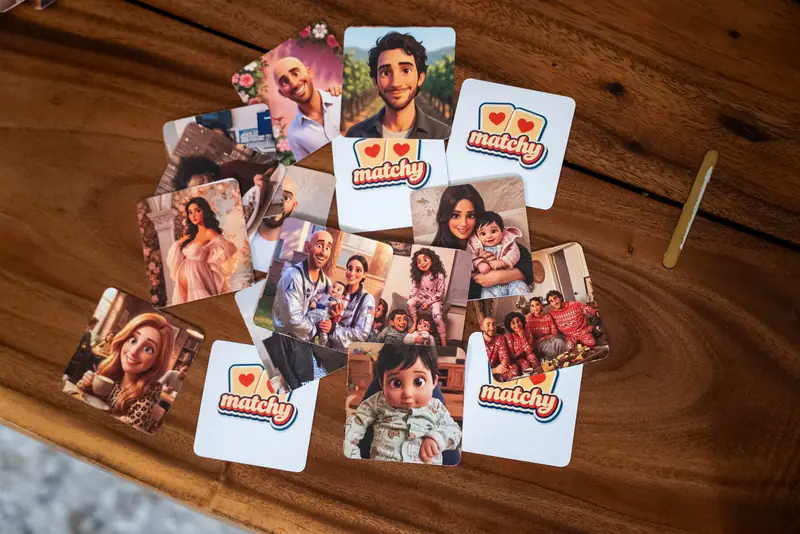
The classic rules come later. For now, try these steps up the ladder. Move to the next one when the current one gets easy.
Face-up matching
Lay all the cards face up. Hold one card and ask, "Where's the other Grandma?" Toddlers love being the one who finds her. This is the warm-up, and some kids will want only this for weeks.
Find the one I name
Turn the cards face down and ask for a person. "Can you find Daddy?" Let them flip until he turns up. Every flip is a little surprise, and every face gets a name out loud.
The two-card flip
Now the real thing, with help. They flip two cards. If it's a match, cheer like they scored a goal. If it's a miss, say both names, flip them back and point to where each one went. You're the memory coach.
Team game
Once they get it, pair them with an older sibling or a grown-up against another team. Nobody plays alone, and the youngest still gets every win.
Why familiar faces work so well
Picture cards with apples and boats are fine. Most toddlers will flip them a few times and wander off. Put their own family on the cards and the energy changes. Kids tend to stay at the table longer when every card is someone they love.
Familiar faces also give a toddler something to say. "Nana!" "Me!" "Baby!" The game becomes a conversation, which is half the fun at this age. Don't be surprised when your toddler starts asking for "the Grandma game" by name.
Grown-ups get something out of it too. Grandparents who live far away love hearing that their face is the one the baby hunts for first. Send them a video of the moment.
A baby photo of the toddler is a sure winner. Few things delight a two-year-old more than finding a tiny version of themselves.
Keeping it fun, and short
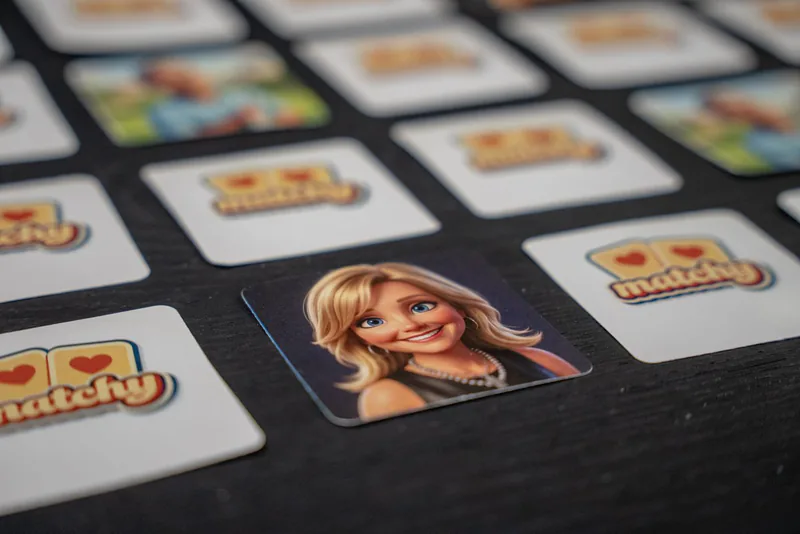
Toddler games end when the toddler says so. Plan for that and you'll get many more rounds over time.
- Stop while it's fun. End after one good round, before the wiggles win. They'll ask for it again.
- Let the rules bend. Peeking is fine. Flipping three cards is fine. The goal is giggles.
- Celebrate every match. High fives, a silly dance, a loud "you found Uncle Sam!"
- Grow the game slowly. When 12 cards feel easy, mix in a few cards from a bigger deck, or move up to a 24-card deck.
- Keep it special. Store the cards somewhere up high. A game that comes out on purpose feels like a treat.
Make one for your little one
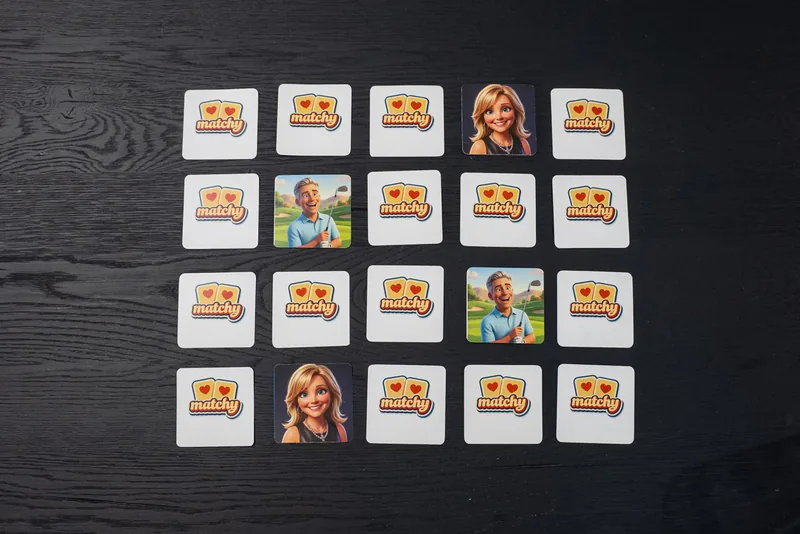
You can make a toddler deck from the photos already on your phone. Pick six faces your child knows best. Choose real or re-drawn. Choose 12 cards to start, or 24 if you'd like room to grow. Then check your first card before you pay.
Matchy Matchy Memory keeps your real photos, from $19.99, so Grandma looks like Grandma. Matchy Matchy Magic re-draws them in 3D Film, Watercolor or Anime, from $29.99, which little kids tend to find hilarious. Questions? Write to us at hello@matchygame.com.