
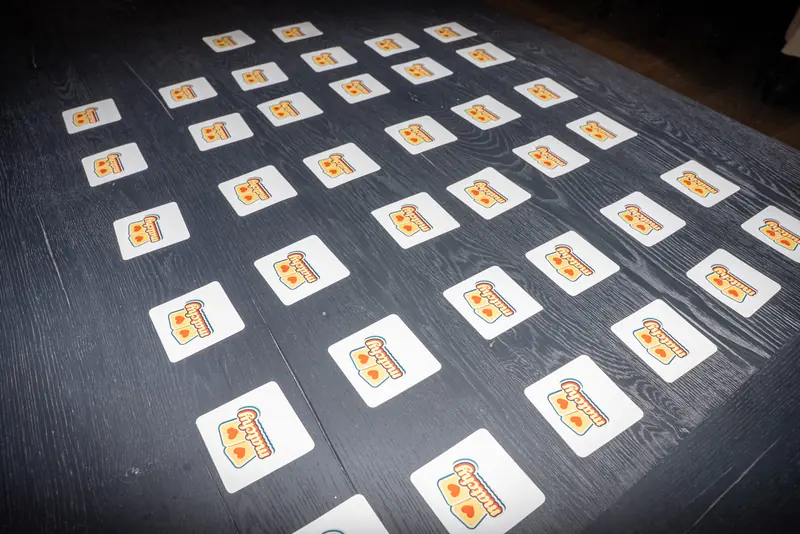
Learning how to play memory game takes about a minute, and getting good at it can take a lifetime. You lay matching cards face down, flip two at a time, and try to remember where everything is hiding. That's the whole game. This guide covers the official rules, how to set up the grid for any number of cards, variations for every age, and a few house rules worth stealing.
The game goes by many names: Memory, Concentration, Pairs, Pelmanism. The rules barely change from table to table. What changes is who you play with and what's on the cards.
How to play memory game: the basic rules
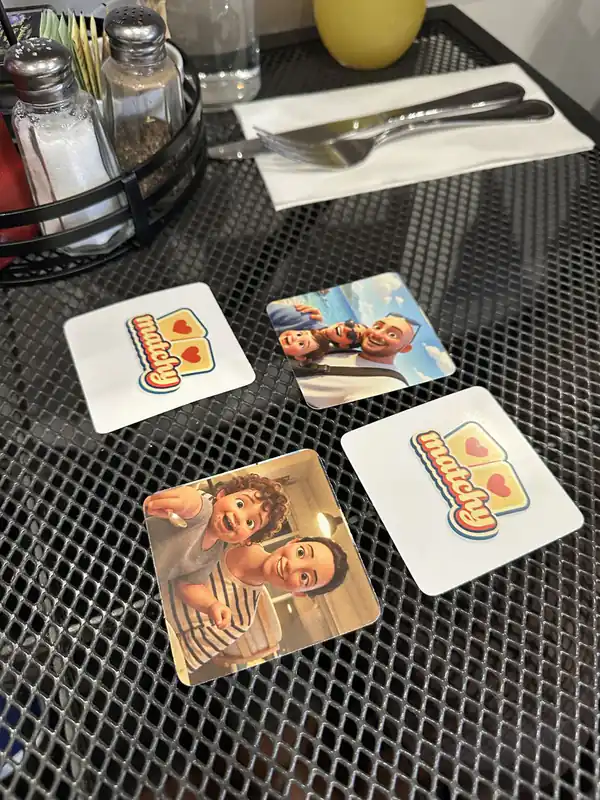
Here is the classic version, the one most families learned as kids.
- Shuffle the deck. Mix the cards well, face down, so nobody knows where anything is.
- Lay out a grid. Place every card face down in neat rows. A tidy grid is easier to remember than a messy pile.
- Pick who goes first. The youngest player usually starts. That is a rule worth keeping.
- Flip two cards. On your turn, turn over any two cards so everyone can see them.
- Keep a match. If the two cards match, keep them and take another turn.
- Flip back a miss. If they don't match, turn them face down in the same spot. Your turn ends.
- Count up at the end. When the last pair is found, the player with the most pairs wins.
That's it. No dice, no board, no reading required. It's one of the first games small kids can play for real.
Common rule questions
Can you flip a card you already know? Yes, and that is the whole strategy. Does a match always earn another turn? In the classic rules, yes, which is how one hot streak can win a game. What if there is a tie? Play one quick tiebreak round with a small grid.
Setting up the grid
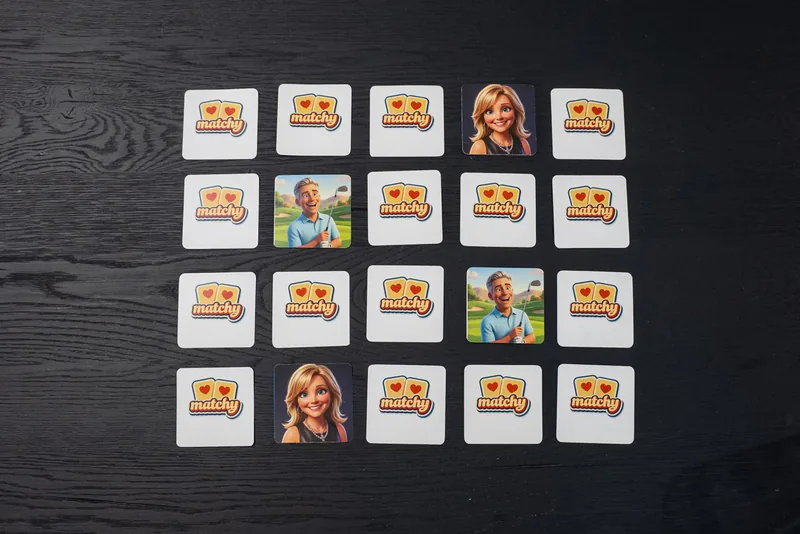
The size of the grid sets the difficulty. More cards means more to remember and a longer game.
- Small grid, 12 cards. Lay them in 3 rows of 4 for a good first game with a three-year-old.
- Medium grid, 24 cards. Lay them in 4 rows of 6 for a solid round with big kids and grown-ups.
- Large grid, 48 cards. Lay them in 6 rows of 8 for a proper game night that takes a while.
Keep the rows straight and leave a little space between cards. Kids remember "top row, second from the end" far more easily than "somewhere near the juice cup." A narrow table works too. Lay the cards in two long rows and play down the length of it.
Variations for every age
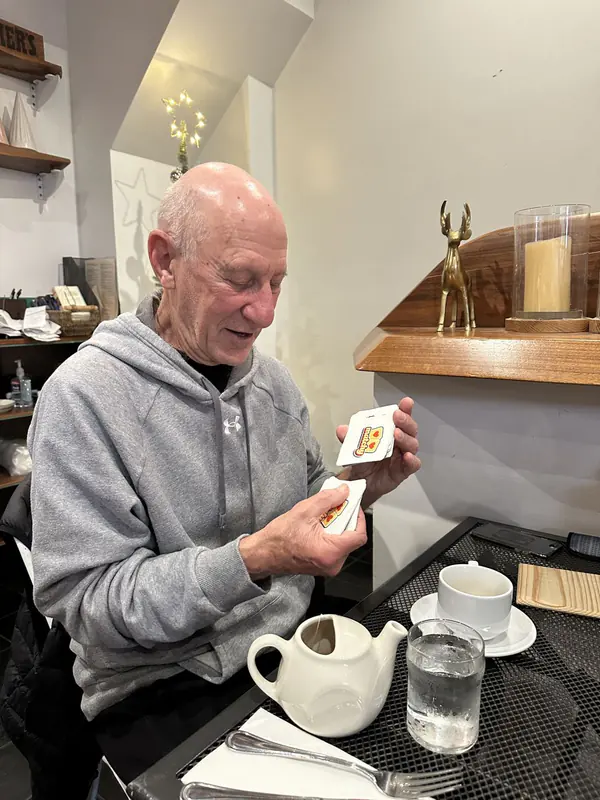
Toddlers: start face up
Begin with all the cards face up and just find the matches together. Once that's easy, flip a few face down. Use a small grid and celebrate every find.
Big kids: beat the clock
Set a timer and see how fast the whole table can clear the grid as a team. Next week, try to beat the record.
Grown-ups: add lookalikes
Add cards that look almost the same, like two photos from the same birthday. Kids groan. Adults suddenly take the game very seriously.
Playing alone
Clear the grid by yourself and count your turns. A lower count is a better score. It makes a calm, quiet game before bed.
Parties and classrooms: teams of four
Split a big group into teams and let each team talk over its turn before flipping. The whispering is half the fun, and shy kids get to join in without being on the spot.
House rules worth stealing
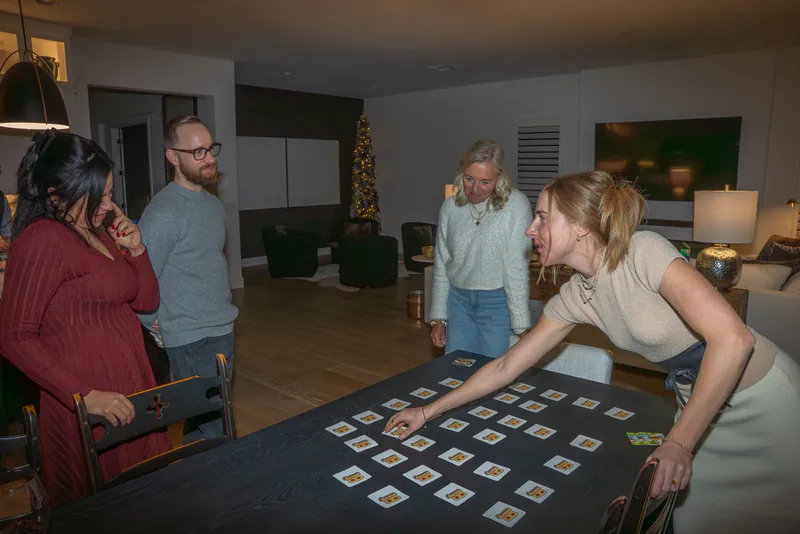
Every family ends up with its own rules. Here are a few that keep mixed ages happy.
- The free peek. The oldest player gets one secret look per game.
- The steal. If you find a pair someone else flipped earlier, say "mine" and take an extra turn.
- The silent round. Nobody talks for a whole game. Harder than it sounds with a five-year-old.
- Teams. Pair the youngest player with a grown-up so every match is shared.
- The story rule. With photo cards, tell one memory about the picture before you keep the pair.
Tips for finding more pairs

- Flip an unknown card first. If it matches one you've seen, go get it. If not, you've learned something new.
- Say it out loud. Naming the card in your head helps you hold on to where it sits.
- Watch every turn. Other players' misses are free information.
- Work the edges. Corners and edges are easier to remember than the middle of the grid.
Playing with little kids? Forget every tip above and flip slowly. Let them see the cards a beat longer. The look on a four-year-old's face when she beats her uncle is worth more than any win.
Why photo cards make it more fun
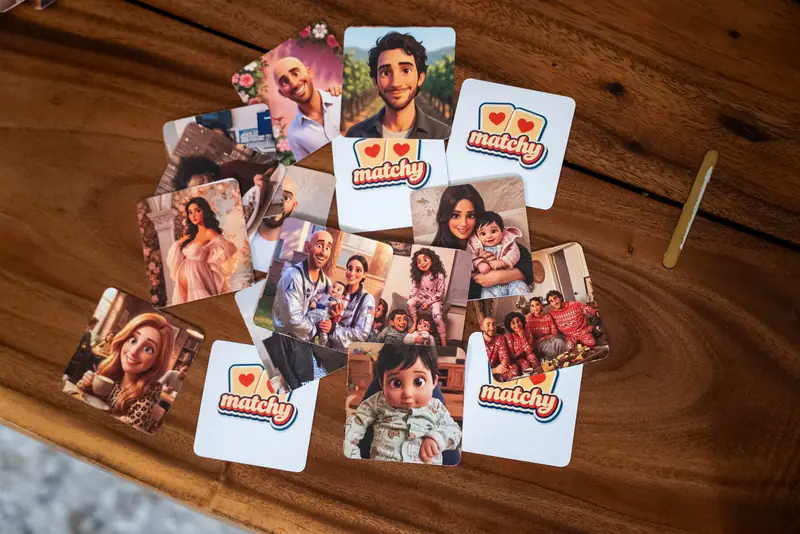
With a store-bought deck, a match is a point. With your own photos, a match is a memory. That's why we make Matchy Matchy Memory, a matching card game printed from your own photos, from $19.99. A four-year-old hunts for Grandpa. Grandpa hunts for the wedding photo. Everyone gets a turn to tell the story.
Prefer something more playful? Matchy Matchy Magic re-draws your photos in 3D Film, Watercolor or Anime, from $29.99. Same rules, a new look.
Ready to make your own?
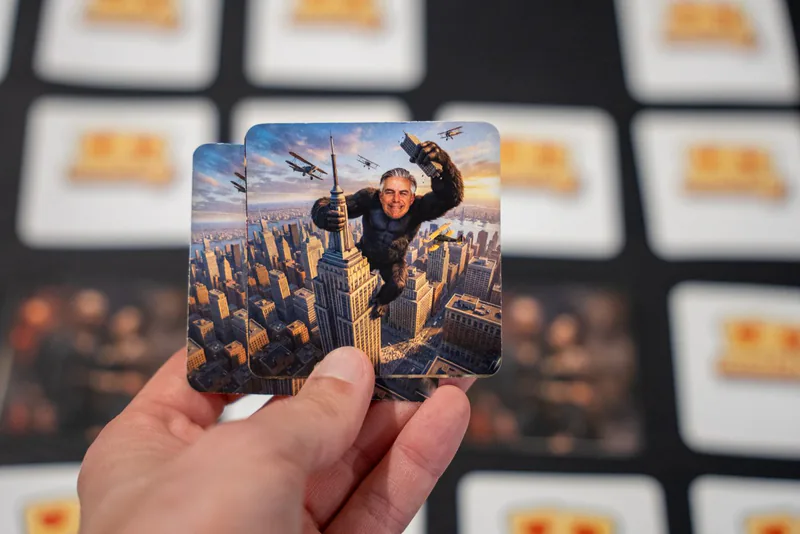
Pick the photos you love. Choose real photos or re-drawn ones. Choose 12, 24 or 48 cards, small grid to large. You upload from your phone, and you see your first card before you pay. Shipping is $5, and free when you order 2 or more decks. US only, ships in 3 to 5 business days.
Start with Matchy Matchy Memory for your real photos, or Matchy Matchy Magic to see your family re-drawn. Questions? Write to us at hello@matchygame.com.