
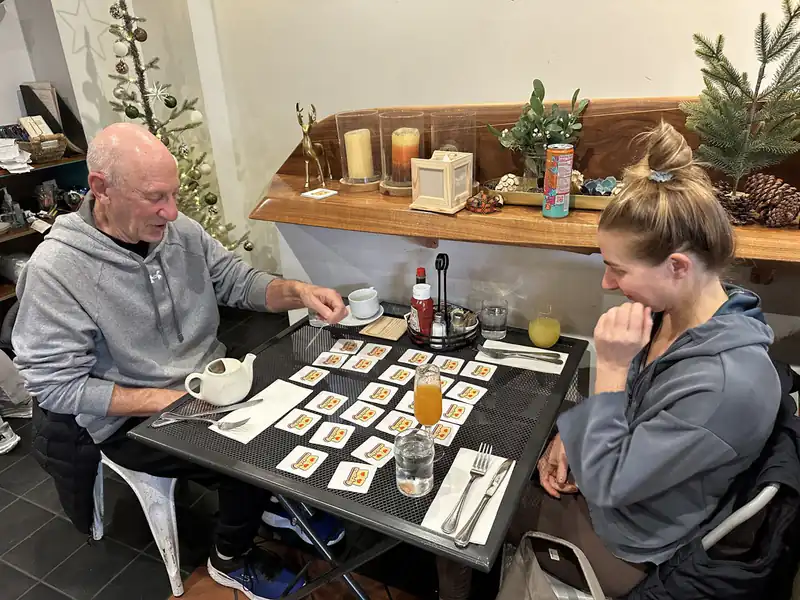
Kims game for families is a looking game: lay eight to ten photo cards face up, let one player study them, then take one away while that player looks away. The player turns back and names the photo that is gone. It takes a minute to learn and works for two players or a whole holiday table.
The classic version uses a tray of small objects, like a spoon, a key and a button. Photos make it better, because a missing face is far easier to argue about than a missing button. Matchy Matchy turns your own photos into a memory card game, and its deck suits Kim's Game well. Below are the setup, the turn, the scoring, and versions for friends and family.
How does Kims game for families work?
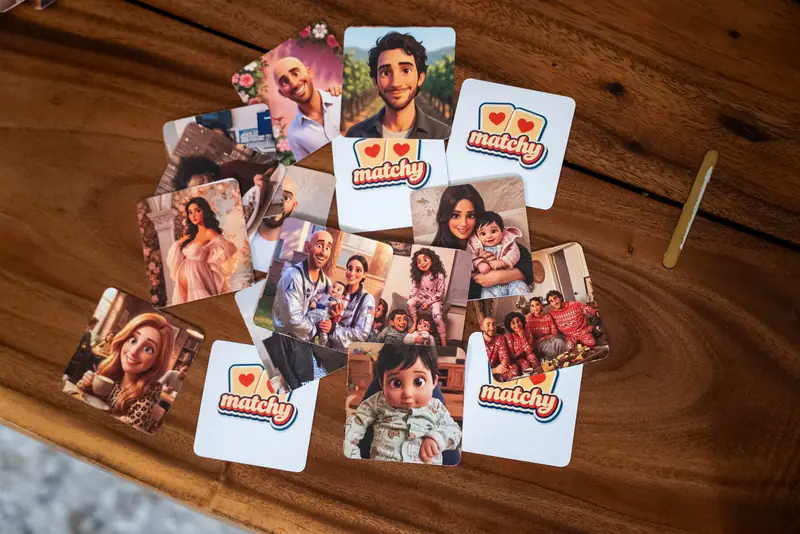
Kims game for families works in three moves: look, look away, name what is missing. One player is the looker. Another player is the taker. Everyone else watches and tries to keep a straight face.
- Players: Two to eight. With more than four, play in teams.
- Deck size: A 24-card deck is the easiest fit, with room for a board of ten and spares.
- Time: A round takes about a minute. A full game runs fifteen to twenty minutes.
- What you need: The deck, a flat table and a group that can count to thirty.
The name comes from Kim, a novel by Rudyard Kipling, where a boy studies a tray of objects and then lists them from memory. Your table only has to remember whether the fishing trip photo was there a second ago.
How do you set up Kim's Game with a photo deck?

Set up Kim's Game with a photo deck by splitting it into twins. A Matchy Matchy Memory deck holds exactly two of each photo, and every back looks the same. That gives you two identical halves.
- Split the deck. Find each match and make two piles, one copy of every photo in each.
- Lay out the board. From the first pile, deal eight to ten photos face up in loose rows.
- Keep the twins. Spread the second pile face up off to the side. That pile is the answer key.
The looker can point to the twin of the missing photo, so nobody has to describe the one with the hat. A 12-card deck gives you six photos, so lay out all six and keep rounds quick. A 24-card deck gives you twelve photos. A 48-card deck gives you twenty-four, enough to change the whole board every few rounds.
- What it is: Matchy Matchy turns your own photos into a memory card game.
- The two games: Matchy Matchy Memory keeps your real photos, from $19.99. Matchy Matchy Magic re-draws them in 3D Film, Watercolor or Anime, from $29.99.
- Sizes: Choose 12, 24 or 48 cards.
- Before you pay: With Matchy Matchy Magic, you see your first card.
- How you order: You upload from your phone at matchygame.com.
- Shipping: Shipping is $5, and free when you order 2 or more decks. US only, ships in 3 to 5 business days.
How does a turn work, and how do you win?
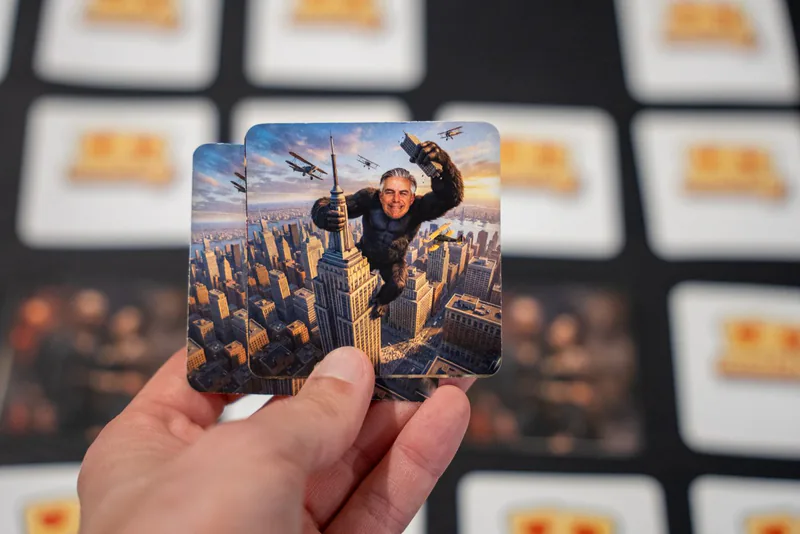
A turn in Kim's Game has five short steps, and the taker changes every round.
- Look. The looker studies the board while the table counts to thirty out loud.
- Turn away. The looker closes their eyes or faces the wall.
- Take one. The taker removes one photo and hides it in their lap. The gap stays open for now.
- Guess. The looker turns back and names the missing photo, or points to its twin in the answer key.
- Score. A right guess scores a point for the looker. A wrong guess gives the point to the taker.
Put the photo back and pass the looker role to the left. The last looker becomes the next taker. The first player to five points wins. For a calmer table, play until everyone has looked twice, then count points.
How do you play Kim's Game with grown-up friends?
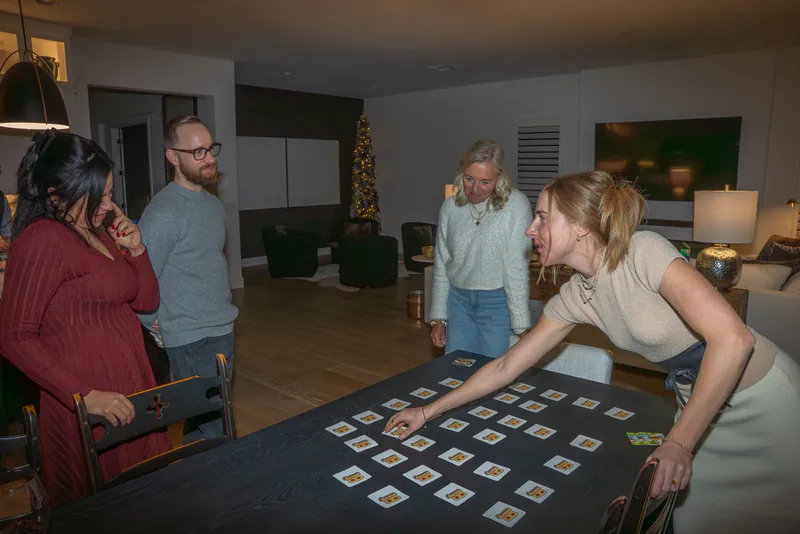
Play Kim's Game with grown-up friends by making the board bigger and the clock shorter.
- Use the big deck. A 48-card deck gives you twenty-four photos. Lay out sixteen and give the looker fifteen seconds.
- Take two. Remove two photos at once. Getting one of them earns half a point.
- Close the gap. After the take, the taker slides the rest into new spots. Now only the faces help.
- Swap instead. Replace one photo with a spare from the first pile that has not been on the board yet. The looker names what left and what arrived.
- Teams. Split into two teams. Each team gets ten seconds to confer before it answers.
A friend group board works best with photos from trips and nights out: the cabin weekend, the wedding dance floor, the terrible karaoke night. The losing team deals the next board.
How does Kim's Game play across generations?
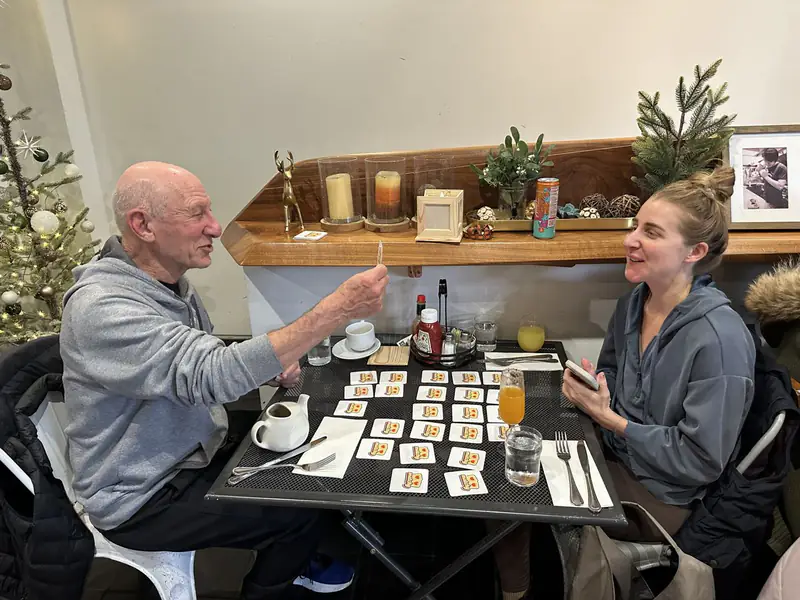
Kim's Game plays well across generations because the handicaps are easy to set. Give each player a board size and a looking time that fits them.
- Youngest players. Six photos, no time limit, and the gap stays open where the card was.
- Teens and grown-ups. Ten photos, thirty seconds, and the cards slide together after the take.
- Mixed pairs. Team a grandparent with a grandchild. Both look, both turn away, and they get ten seconds to agree on an answer. One scans the board for the gap, the other scans the answer key for the face.
Grandma spots that the wedding photo is gone before anyone else notices a gap. A six-year-old knows instantly when the dog in the birthday hat has left. Everyone at the table has one photo they will always miss.
Which house rules keep Kim's Game fresh?
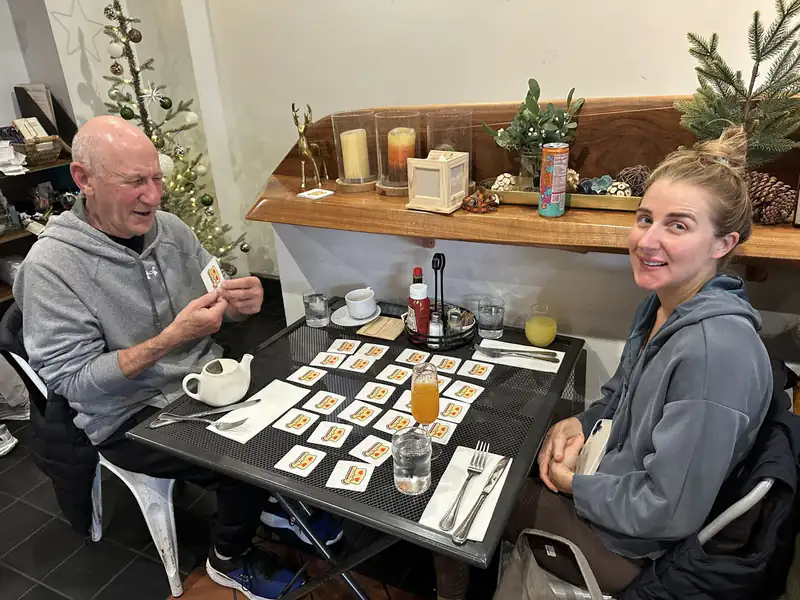
House rules keep Kim's Game fresh once everyone gets good at the basic round.
- The lonely twin. Lay out all twelve cards of a 12-card deck face up. Take one away. The looker finds the photo that lost its match.
- Story to score. To keep the point, say where the missing photo was taken.
- The bluff. The taker can choose to take nothing. The looker has to call it.
- The shrinking board. Each round, take one more photo and leave the earlier ones out. Play until someone misses.
Which photos make a good board?
Pick photos that are easy to tell apart at a glance: close faces, pets, bright colors, one clear subject each. Kim's Game suits a table that enjoys a quiet stretch. A crowd that wants nonstop noise will have more fun with photo charades.
Ready to make your own?
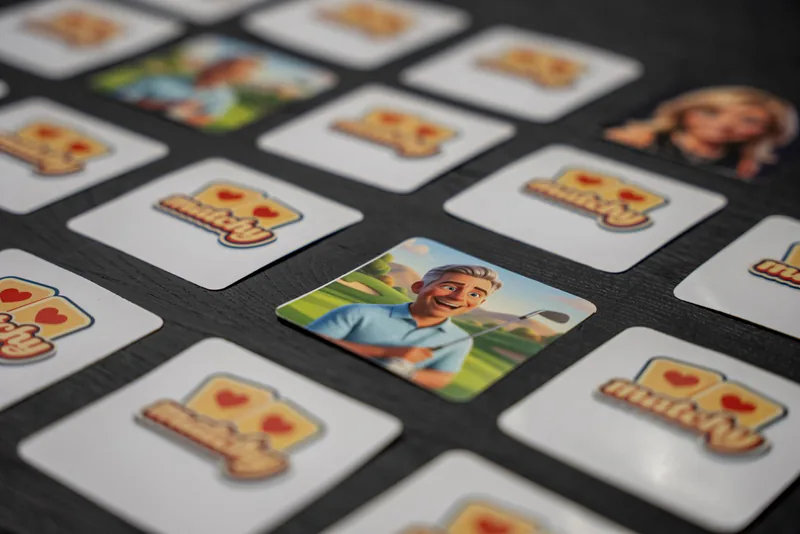
Pick the photos your table will recognize in a second. Choose real or re-drawn. Choose 12, 24 or 48 cards. Shipping is $5, and free when you order 2 or more decks. US only, ships in 3 to 5 business days.
Start with Matchy Matchy Memory to keep your real photos, from $19.99, or try Matchy Matchy Magic to see everyone re-drawn in 3D Film, Watercolor or Anime, from $29.99. Questions? Write to us at hello@matchygame.com.