
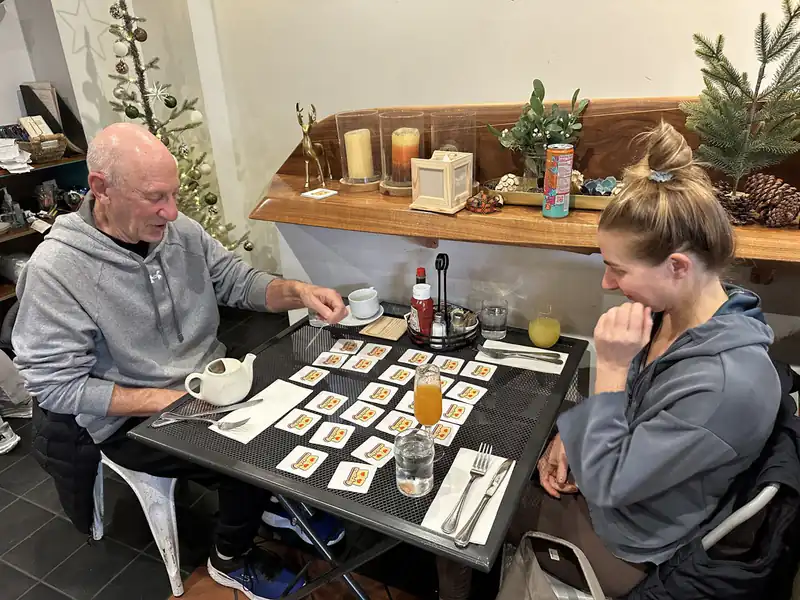
To play go fish with picture cards, deal each player a hand and take turns asking one person for the match to a photo you hold. You ask by describing the picture: "Do you have Grandpa at the lake?" If they have it, they hand it over and you lay the pair down. If they don't, they say "go fish" and you draw from the pile. Most pairs at the end wins.
Any deck works as long as every picture appears exactly twice. Matchy Matchy turns your own photos into a memory card game, and every deck holds two of each photo, so a Matchy Matchy Memory deck doubles as a go fish deck. Asking by the moment instead of a number is half the fun.
Go fish with picture cards: the rules in one minute

Go fish with picture cards follows the classic rules with one change. You collect pairs of the same photo instead of four of a kind, because a photo deck holds each picture twice.
- Deal. Shuffle and deal a hand to each player. Spread the rest face down in the middle. That messy spread is the pond.
- Lay down pairs. Before anyone asks, everyone lays any pairs already in their hand face up in front of them.
- Ask. On your turn, pick one player and ask for the match to a photo in your hand. Describe it out loud. You can only ask for a photo you hold.
- Hand it over. If they have it, they give it to you. Lay the pair down and ask again.
- Go fish. If they don't, they say "go fish." Draw one card from the pond. If it is the photo you asked for, show it, lay the pair down and go again. If it isn't, your turn ends.
- Empty hand. Run out of cards and you draw one from the pond on your next turn. Once the pond is empty too, you sit back and cheer.
- Win. The game ends when every pair is on the table. Most pairs wins.
How many players and which deck size work best?
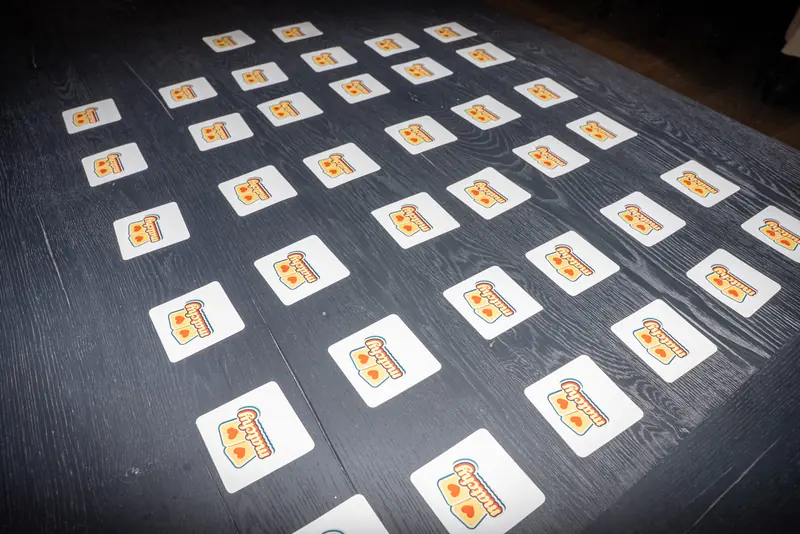
Go fish with a photo deck works for two to six players. The deck size sets how long the game runs, so match it to the crowd.
- 12 cards, two players. Six photos, each printed twice. Deal four cards each and leave four in the pond.
- 24 cards, two to four players. Twelve photos, each printed twice. Deal seven cards each for two players, and five each for three or four.
- 48 cards, four to six players. Twenty-four photos, each printed twice. Deal five cards each and keep a big pond. More photos means more asking, more fishing and a longer game.
How do you ask for a photo instead of a number?
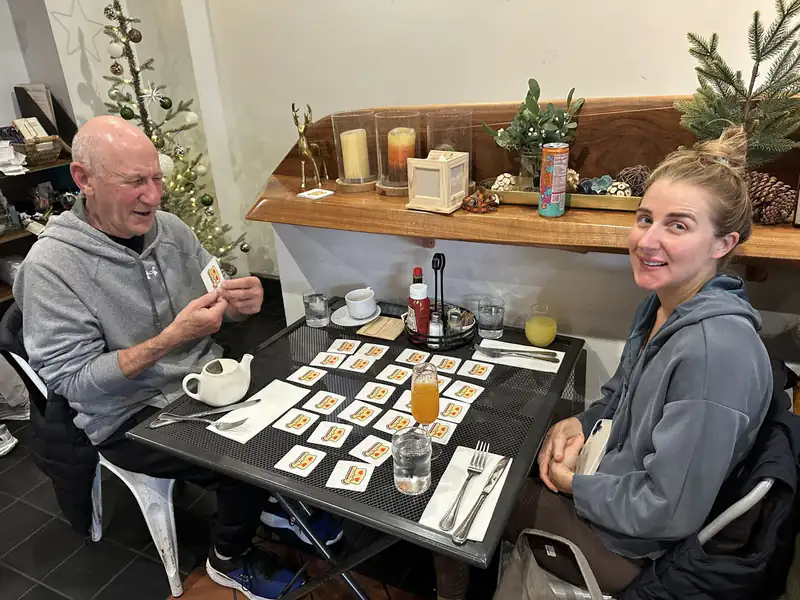
You ask for a photo by describing the moment in it, clearly enough that the other player knows which card you mean. "Do you have Grandpa at the lake?" works. "Do you have Grandpa?" starts an argument if the deck holds three photos of him.
- Name the place. "The beach day with the broken umbrella."
- Name the moment. "Mom blowing out the candles."
- Name the odd detail. "The dog in the birthday hat."
- Name who is in it. "Both cousins on the porch steps."
If two photos could fit your words, the player you asked says "which one?" and you add one detail. They hand over a card only when it matches what you described. Answer honestly. Hiding a match you hold is the one thing nobody forgives.
The asks turn the game into a quick tour of your photos. Photos with a clear place or a strange detail make the easiest asks. Skip near duplicates, like five shots from the same birthday, unless you want a harder game.
How does go fish play with friends and across generations?
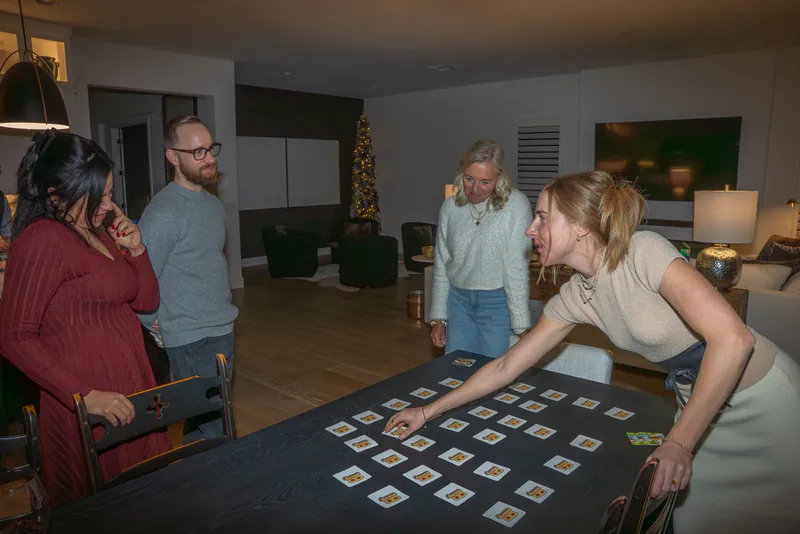
Go fish with a photo deck plays well with a table of grown-up friends and with three generations at once. The rules stay the same. The asks change.
With grown-up friends
Build the deck from the group chat. The road trip, the terrible karaoke night, the first apartment with the green couch. With friends, the asks turn into inside jokes. "Do you have the night the tent collapsed?" gets a laugh before anyone checks their hand.
- The no-names rule. Describe the moment and never name the person. "The guy who fell asleep at the wedding" counts.
- The story tax. When you lay down a pair, anyone who was there tells the story in one sentence.
Across generations
Mix old photos with new ones so everyone holds something they know. Grandma can ask for her wedding day. A seven-year-old can ask for the cat in the laundry basket. Younger players who can't read yet play on equal footing, since there are no numbers to read.
- Teams. Pair a grandparent with a grandkid and let them whisper over each ask.
- The helper ask. A younger player points at a photo in their hand, and a teammate says the ask out loud.
- The guess rule. When a pair goes down, the oldest player at the table guesses the year it was taken.
Why does a Matchy Matchy deck work for go fish?
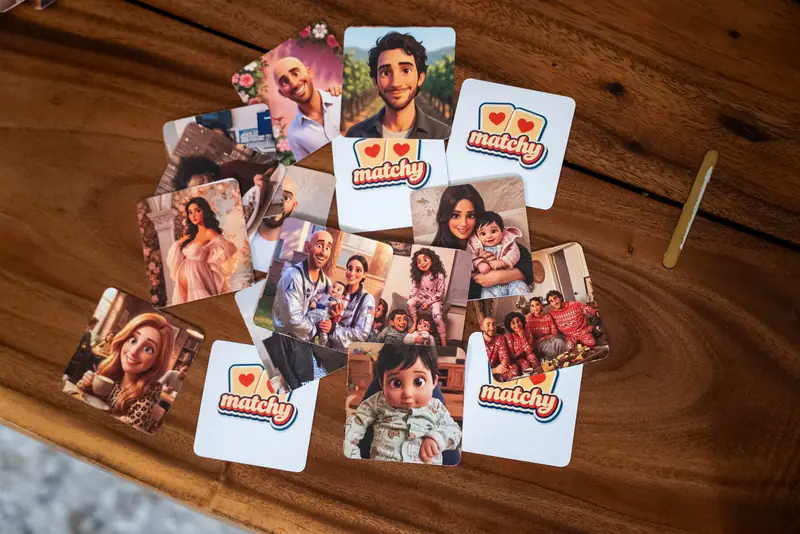
A Matchy Matchy deck works for go fish because every photo is printed exactly twice and every back looks the same. That is all go fish with pairs needs. The same deck also plays the classic flip-two memory game, so one deck gives you two games.
- What it is: Matchy Matchy turns your own photos into a memory card game.
- The two games: Matchy Matchy Memory keeps your real photos, from $19.99. Matchy Matchy Magic re-draws them in 3D Film, Watercolor or Anime, from $29.99.
- Sizes: Choose 12, 24 or 48 cards.
- Before you pay: With Matchy Matchy Magic, you see your first card.
- How you order: You upload from your phone at matchygame.com.
- Shipping: Shipping is $5, and free when you order 2 or more decks. US only, ships in 3 to 5 business days.
Real photos suit go fish well, since you ask by the moment and the moment is easy to spot in the real picture. Re-drawn cards add a twist. Describing your uncle in Watercolor is a little harder and a lot funnier. A photo deck suits a table of people who share the memories. A crowd of strangers will get more out of a regular deck.
Ready to deal your own?
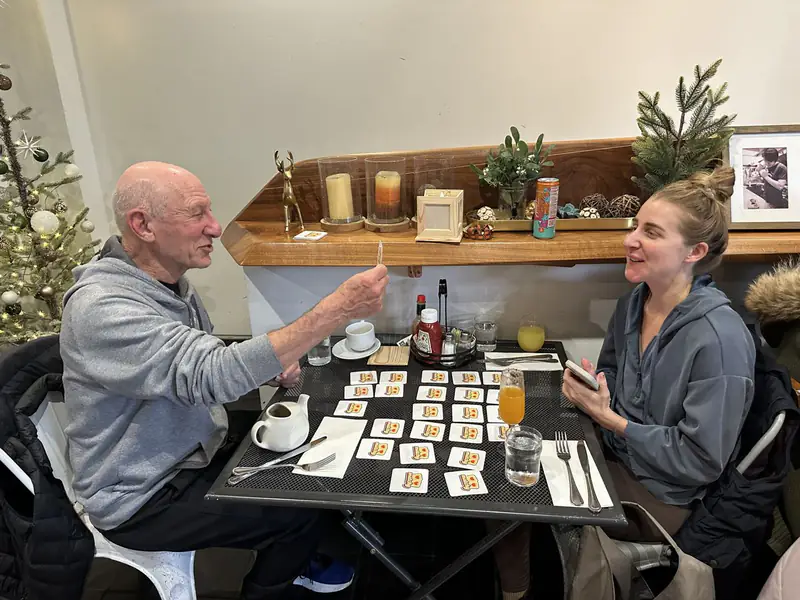
Pick photos your table will recognize from the moment alone. Choose real or re-drawn. Choose 12, 24 or 48 cards.
Start with Matchy Matchy Memory to keep your real photos, or try Matchy Matchy Magic to see everyone re-drawn in 3D Film, Watercolor or Anime. Order early if you want it on the table for the holidays. Questions? Write to us at hello@matchygame.com.